
The first thing the students at Central Elementary noticed was the height.
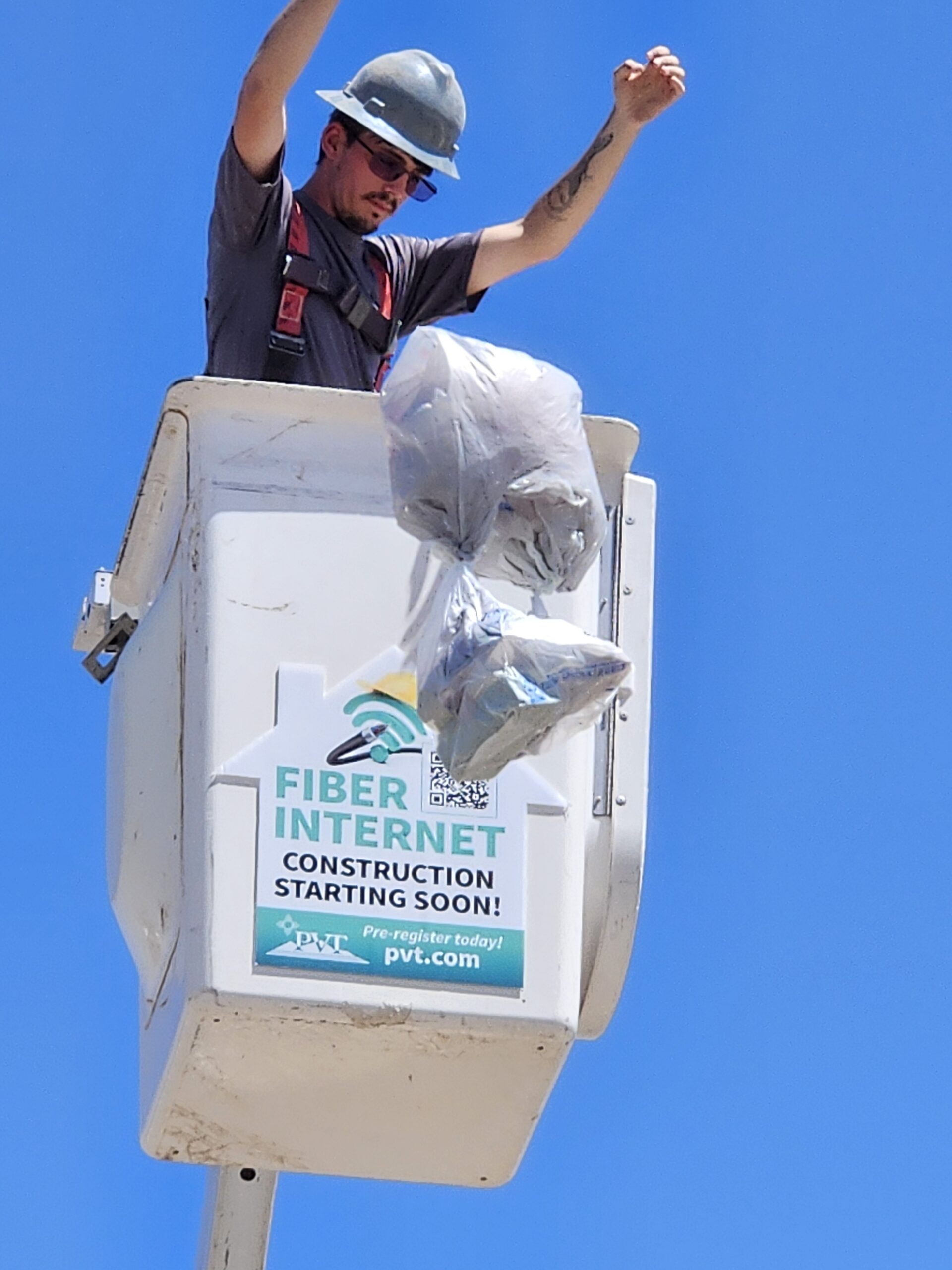
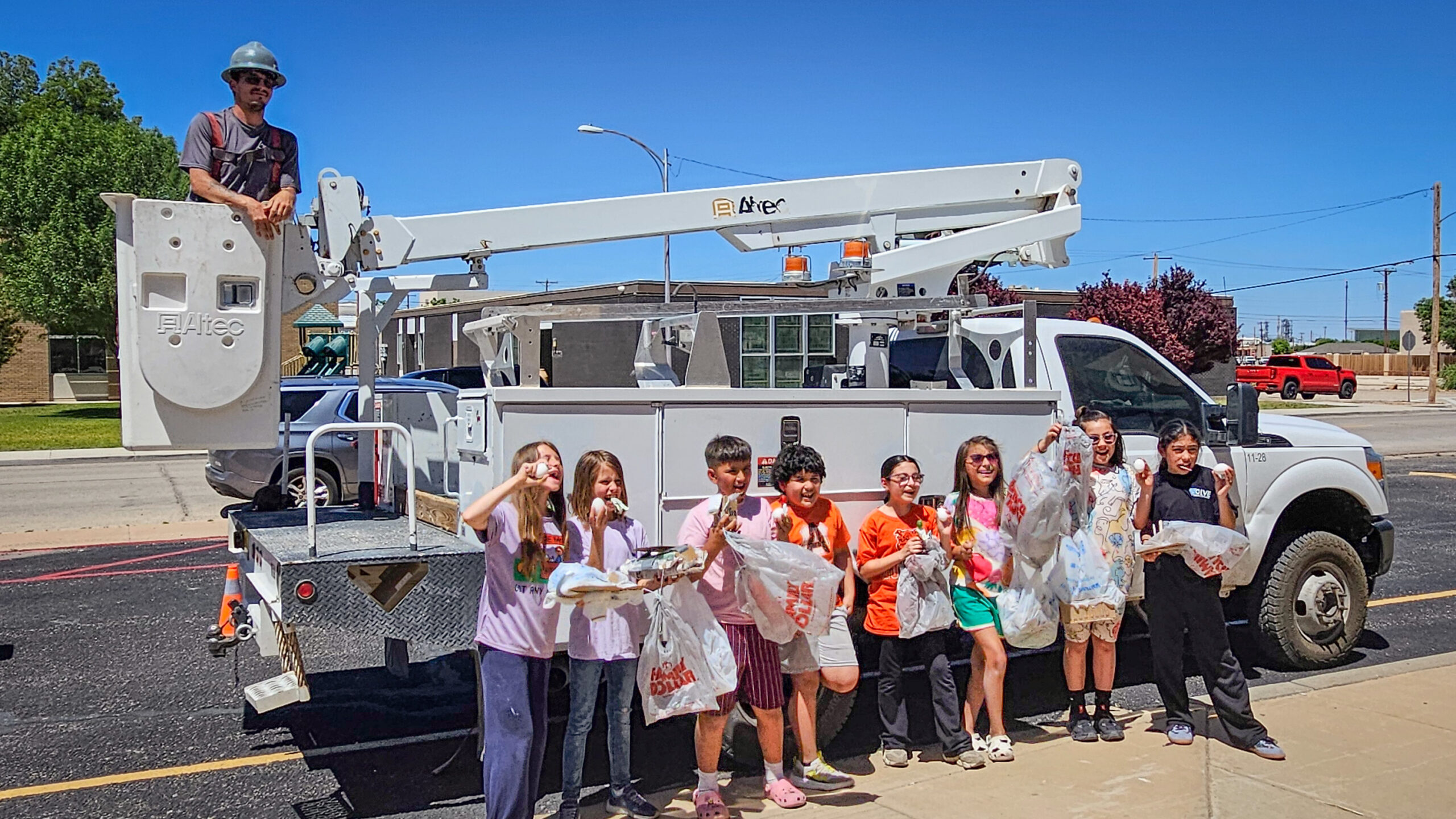
A white bucket truck rolled onto the edge of the playground, its boom rising higher than the basketball goal, higher than the shade structure, higher than most fourth graders had ever seen anything go that wasn’t a kite. Inside the bucket stood Tyler Johnson, one of our construction crew members, waving down to a crowd of kids clutching carefully taped containers. Inside those containers were eggs. Inside those eggs were hopes.
Science class was about to get real.
Egg drop day has a way of doing that.
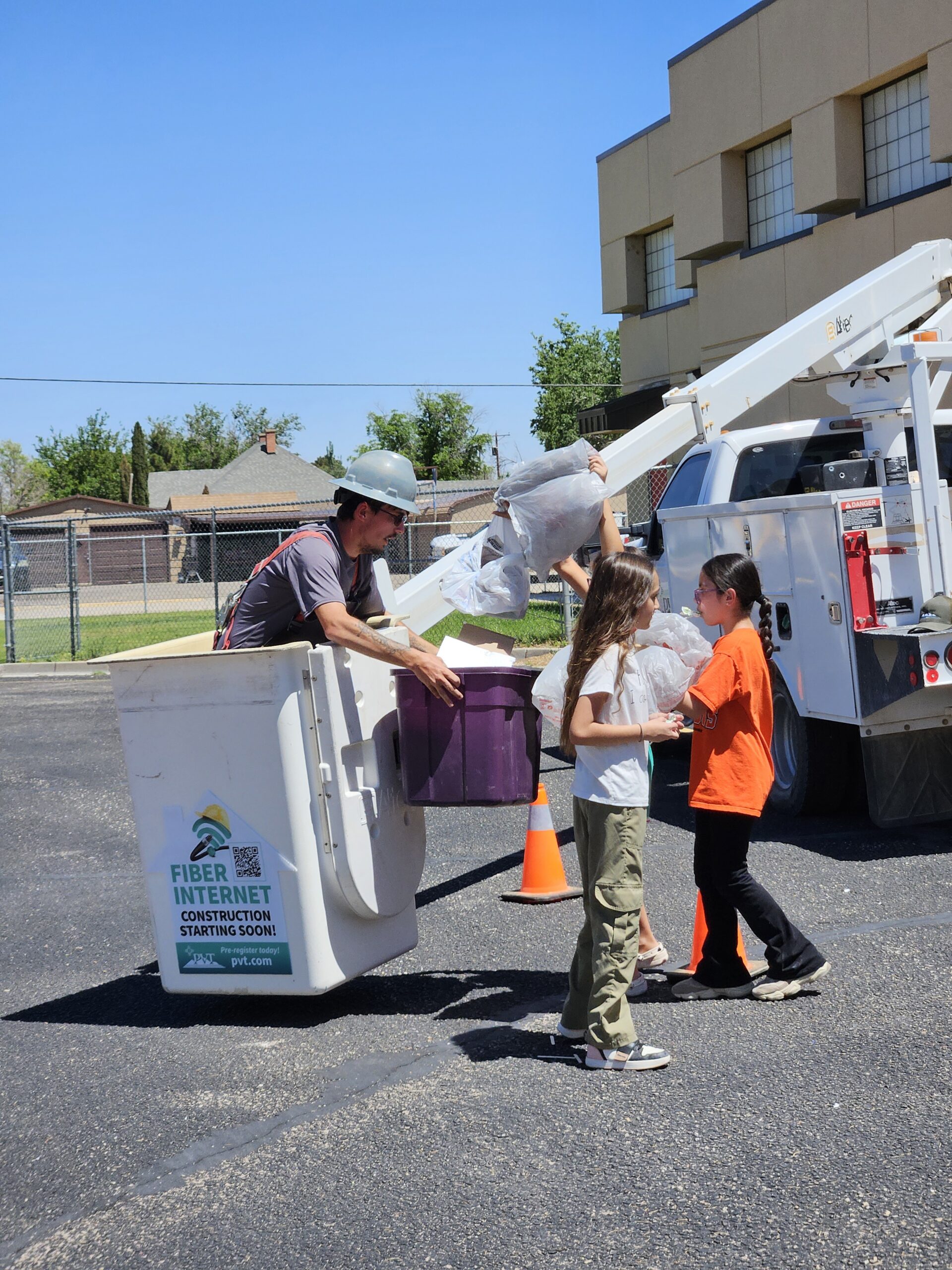
For years, teachers have used the classic egg drop experiment to help students learn how ideas become tests and how tests become answers. This year, Central Elementary decided to raise the stakes. They asked if PVT could help give the experiment a little more height and a lot more wonder.
We said yes.
What followed was a moment where heavy equipment met elementary curiosity, and where a piece of machinery built to reach fiber lines became a front‑row seat for learning the scientific method.
For those who haven’t seen one up close, an egg drop competition challenges students to protect a raw egg from cracking when dropped from a height. The rules are simple. Design a container using limited materials. Make a prediction. Test it. Observe the result. Talk about what worked and what didn’t.
At Central Elementary, the height came courtesy of a PVT bucket truck, extended as high as safety would allow. Tyler eased the controls with the same care he brings to the job every day, lifting student designs up while the class watched from below. Some kids squinted up into the sun. Others bounced on their toes. A few covered their ears as if that might help.
When each creation hit the concrete, the sound told a story. Sometimes there was a dull thud followed by cheers. Sometimes there was a sharper crack and a collective groan. Every drop delivered data.
Teachers guided students through the process, asking why one design survived and another didn’t. Air pockets came up. Weight distribution did, too. So did the importance of testing assumptions. The lesson moved fast, fueled by excitement and the thrill of seeing an idea take flight, then meet gravity.
For Tyler, the day offered a different view from the bucket. He fielded questions between drops. How high can it go. How long did it take to learn to drive it. What else does it do. The truck that usually carries tools and crews carried curiosity instead.
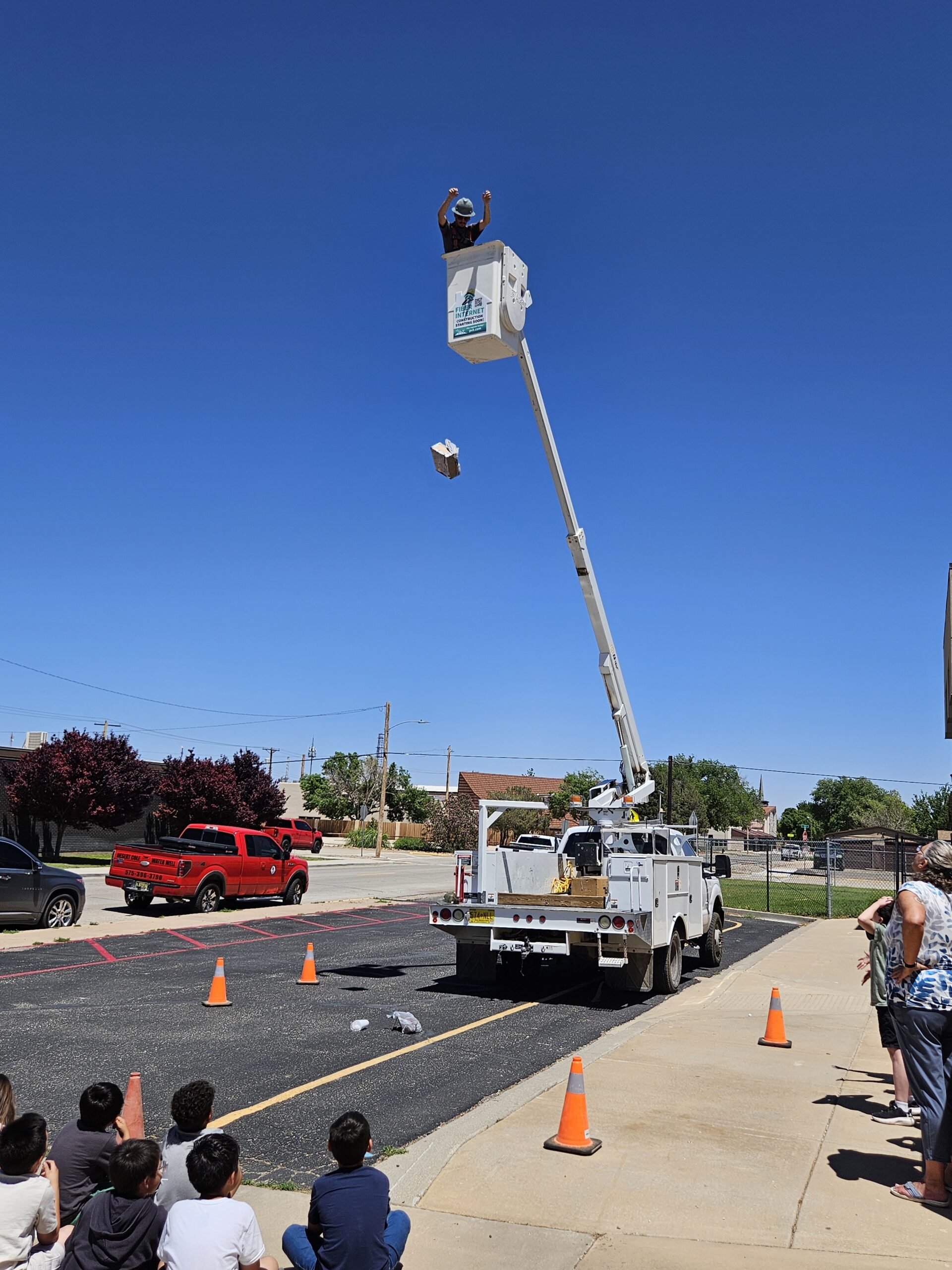
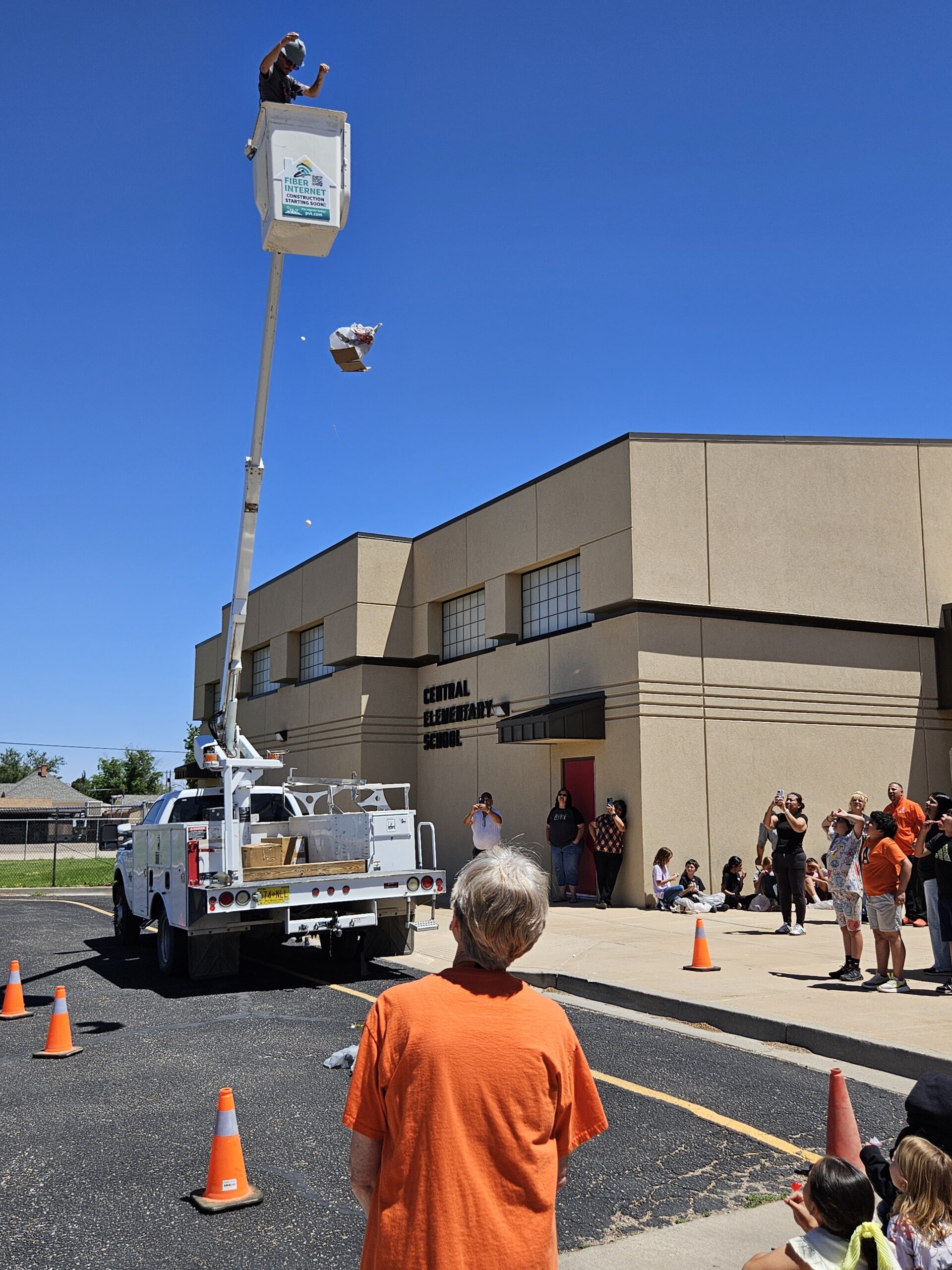
This equipment is part of how we build and maintain the infrastructure our community relies on. On this day, it became a bridge between textbook science and lived experience. Students didn’t just hear about force and impact. They saw it from 40 feet up.
PVT has long believed that supporting our schools means showing up in ways that feel tangible. Sometimes that looks like sponsorships or scholarships. Sometimes it looks like a crew member taking extra time to help a class test an idea safely and memorably.
By the end of the competition, a few eggs remained intact. Many did not. Every student walked away with a clearer understanding of how questions turn into experiments and how experiments shape learning. Several walked away talking about becoming engineers.
That’s a win we’ll take every time.
Moments like this don’t happen by accident. They grow from a community choosing to invest in its students again and again.
If you want to be part of that investment, check out our Scholarship Round Up Program. It’s a simple way to support local students who are building their futures right here, just like the kids who looked up at that bucket truck and saw possibility.
We’re proud to stand with our schools. We’re proud to be neighbors. And we’re always glad to help learning reach a little higher.